


As a supplier of laptop power adapters, I often encounter questions from customers about various technical aspects of our products. One question that comes up quite frequently is, "What is the power factor of a laptop power adapter?" In this blog post, I'll delve into the concept of power factor, its significance in laptop power adapters, and how it relates to our product offerings such as the TS-W65A02S Multi – function Fast Charging with Charging bank, 100W Type-C Power Adapter, and Multi-port Fast Charging Adapter.
Understanding Power Factor
Power factor is a measure of how effectively electrical power is being used in an alternating current (AC) circuit. In an ideal world, all the electrical power supplied to a device would be used for useful work, such as charging a laptop battery or running its components. However, in real-world scenarios, some of the power is wasted due to the characteristics of the electrical load.
The power factor is defined as the ratio of real power (measured in watts, W) to apparent power (measured in volt-amperes, VA). Real power is the actual power that does useful work, while apparent power is the product of the voltage and current in the circuit. Mathematically, power factor (PF) is expressed as:
[ PF=\frac{P}{S} ]
where (P) is the real power and (S) is the apparent power.
A power factor of 1 (or 100%) indicates that all the electrical power supplied is being used for useful work, with no power being wasted. On the other hand, a power factor less than 1 means that some of the power is being wasted, typically in the form of reactive power. Reactive power is the power that oscillates between the source and the load without doing any useful work. It is caused by inductive or capacitive elements in the circuit, such as transformers, motors, and capacitors.
Why Power Factor Matters in Laptop Power Adapters
Power factor is an important consideration in laptop power adapters for several reasons. Firstly, a low power factor means that more electrical power needs to be supplied to the adapter to achieve the same amount of useful work. This results in higher energy consumption and increased electricity bills for the end user. Additionally, a low power factor can cause problems in the electrical distribution system, such as voltage drops, increased losses in the transmission lines, and reduced capacity of the electrical infrastructure.
Secondly, power factor regulations are becoming increasingly stringent in many countries around the world. Governments and regulatory bodies are implementing standards to encourage the use of energy-efficient electrical devices, including laptop power adapters. For example, the European Union's ErP (Energy-related Products) Directive sets requirements for the power factor of electrical equipment, including power supplies. Compliance with these regulations is not only a legal requirement but also a marketing advantage for laptop power adapter manufacturers.
Finally, a high power factor can improve the overall performance and reliability of a laptop power adapter. By reducing the amount of wasted power, a high power factor adapter generates less heat, which can extend the lifespan of the adapter and reduce the risk of overheating. Additionally, a high power factor adapter can provide a more stable and consistent power output, which is important for the proper functioning of the laptop.
Power Factor in Our Laptop Power Adapters
At our company, we understand the importance of power factor in laptop power adapters. That's why we design and manufacture our products to have a high power factor, typically above 0.9. This means that our adapters are able to convert a greater percentage of the electrical power they receive into useful work, resulting in lower energy consumption and reduced environmental impact.
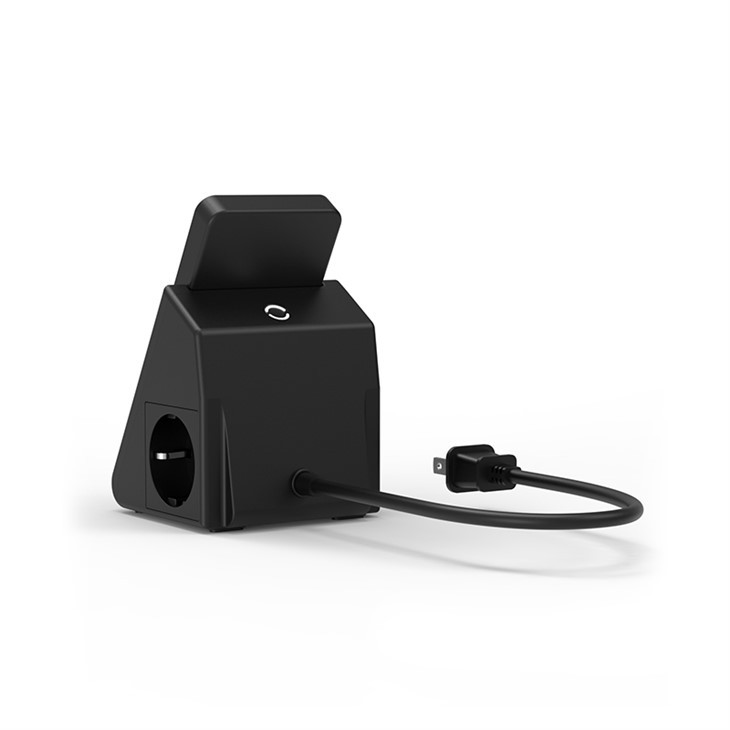
Our TS-W65A02S Multi – function Fast Charging with Charging bank is a prime example of our commitment to energy efficiency. This adapter features a high power factor design, which ensures that it uses electrical power effectively and minimizes wasted energy. In addition to its high power factor, the TS-W65A02S also offers multi-function fast charging capabilities, allowing users to charge their laptops and other devices quickly and efficiently.
Another product in our lineup that boasts a high power factor is the 100W Type-C Power Adapter. This adapter is designed to meet the high power requirements of modern laptops, while still maintaining a high power factor. With its high power output and energy-efficient design, the 100W Type-C Power Adapter is ideal for users who need to charge their laptops quickly and on the go.
Our Multi-port Fast Charging Adapter is also engineered to have a high power factor. This adapter features multiple ports, allowing users to charge multiple devices simultaneously. By using a high power factor design, the Multi-port Fast Charging Adapter is able to provide efficient and reliable charging for all connected devices, without wasting energy.
Improving Power Factor in Laptop Power Adapters
There are several ways to improve the power factor in laptop power adapters. One common approach is to use a power factor correction (PFC) circuit. A PFC circuit is a special type of circuit that is designed to adjust the input current waveform to match the input voltage waveform, thereby reducing the reactive power and improving the power factor.

There are two main types of PFC circuits: passive and active. Passive PFC circuits use simple components such as inductors and capacitors to correct the power factor. They are relatively inexpensive and easy to implement, but they have limited effectiveness in improving the power factor. Active PFC circuits, on the other hand, use more complex electronic components such as integrated circuits and power transistors to actively control the input current waveform. They are more expensive and complex to design, but they can achieve a higher power factor, typically above 0.95.
Another way to improve the power factor in laptop power adapters is to use high-quality components and advanced manufacturing techniques. By using high-quality transformers, capacitors, and other components, the adapter can reduce the amount of reactive power and improve the power factor. Additionally, advanced manufacturing techniques such as surface mount technology (SMT) and automated assembly can ensure the consistency and reliability of the adapter, which can also contribute to a higher power factor.
Conclusion
In conclusion, power factor is an important consideration in laptop power adapters. A high power factor means that the adapter uses electrical power more effectively, resulting in lower energy consumption, reduced electricity bills, and improved performance and reliability. At our company, we are committed to designing and manufacturing laptop power adapters with a high power factor to meet the needs of our customers and comply with the latest energy efficiency regulations.
If you are interested in learning more about our laptop power adapters or would like to discuss your specific requirements, please feel free to contact us. We would be happy to provide you with more information and help you find the right power adapter for your needs.
References
- IEEE Standard 1459-2010, "IEEE Standard Definitions for the Measurement of Electric Power Quantities Under Sinusoidal, Nonsinusoidal, Balanced, or Unbalanced Conditions"
- European Union's ErP (Energy-related Products) Directive, "Directive 2009/125/EC of the European Parliament and of the Council on establishing a framework for the setting of ecodesign requirements for energy-related products"
- Power Electronics: Converters, Applications, and Design, Third Edition by Ned Mohan, Tore M. Undeland, and William P. Robbins


